
Re-angle Mirror: A Mirror Made from What Was Left Behind

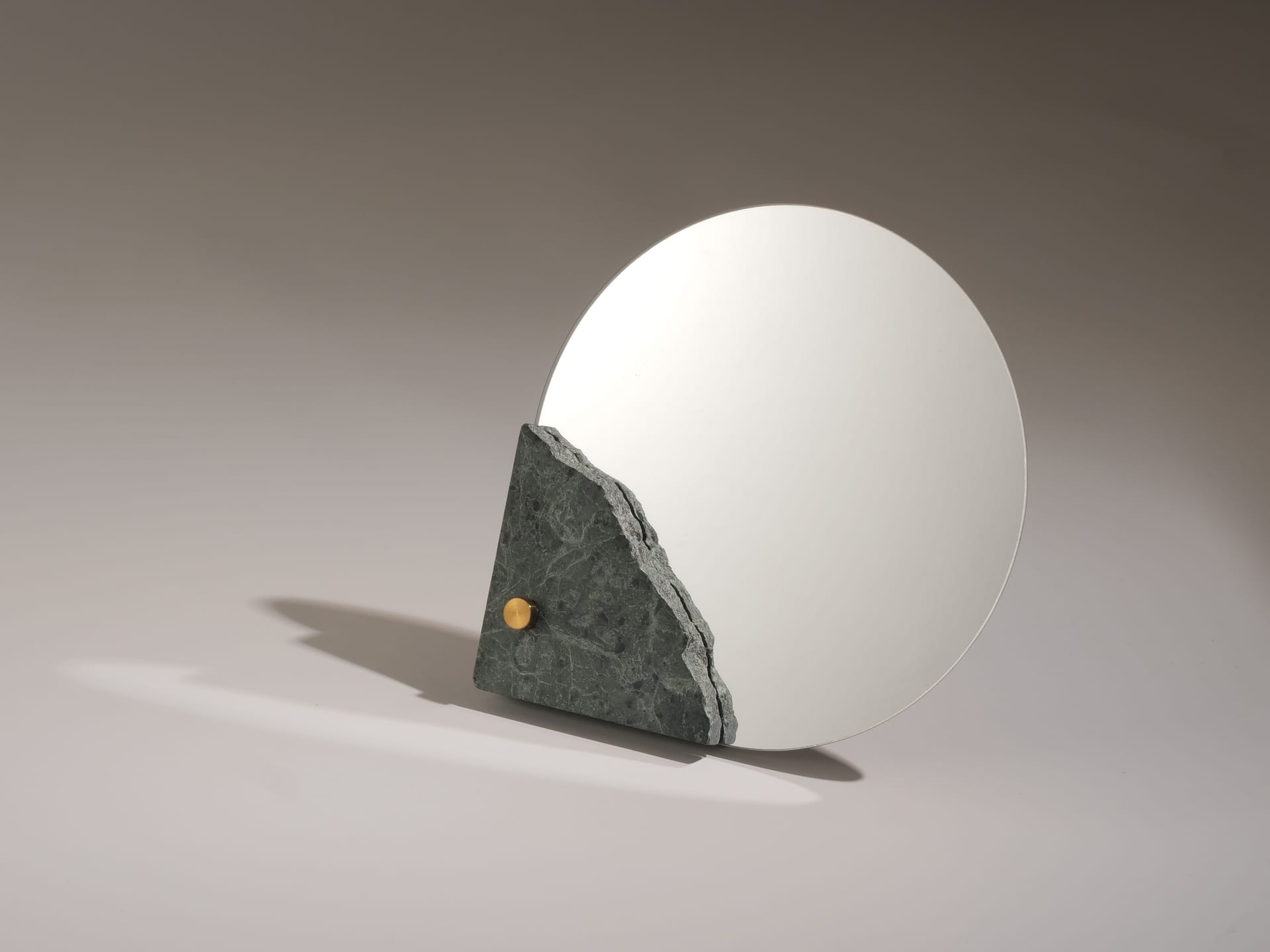
Marble extraction comes with a cost that is rarely seen.
Waste.
Throughout quarrying, cutting, and polishing, nearly 70 percent of the original stone is lost. What remains is often reduced to powder, fragments, or slurry, materials that are typically discarded rather than valued.
In 2016, Taiwan’s Stone and Resource Industry R&D Center (SRDC) launched a project to rethink this reality. By bringing designers into collaboration with stone processing manufacturers the initiative set out to address material waste while opening new paths for social responsibility and the evolution of traditional industries.
Source: re.O / Lightlogue
Re-angle Mirror was introduced in 2025 by re.O as part of this project. Each piece combines a mirror with a solid marble base made from reclaimed offcuts left behind during the production of other stone products. Rather than masking the material’s origins, the design preserves sections of the marble’s irregular fracture surfaces, allowing imperfection to become part of the object’s identity. What was once considered excess is redefined as value.
For re.O, material waste is not a problem to solve, but an opportunity to rethink what design can be. Instead of discarding industrial remnants, the studio reclaims them, transforming leftovers into objects with new purpose and meaning, rooted in respect for material and process.
The marble used in Re-angle Mirror is closely tied to its place of origin. Taiwan may be geographically small, but its geology is anything but simple. Located at the meeting point of the Philippine Sea Plate and the Eurasian Plate, the island has been shaped by constant tectonic pressure. In eastern Taiwan, particularly around Hualien, this pressure gave rise to rare marble deposits that have long supported the country’s stone industry.
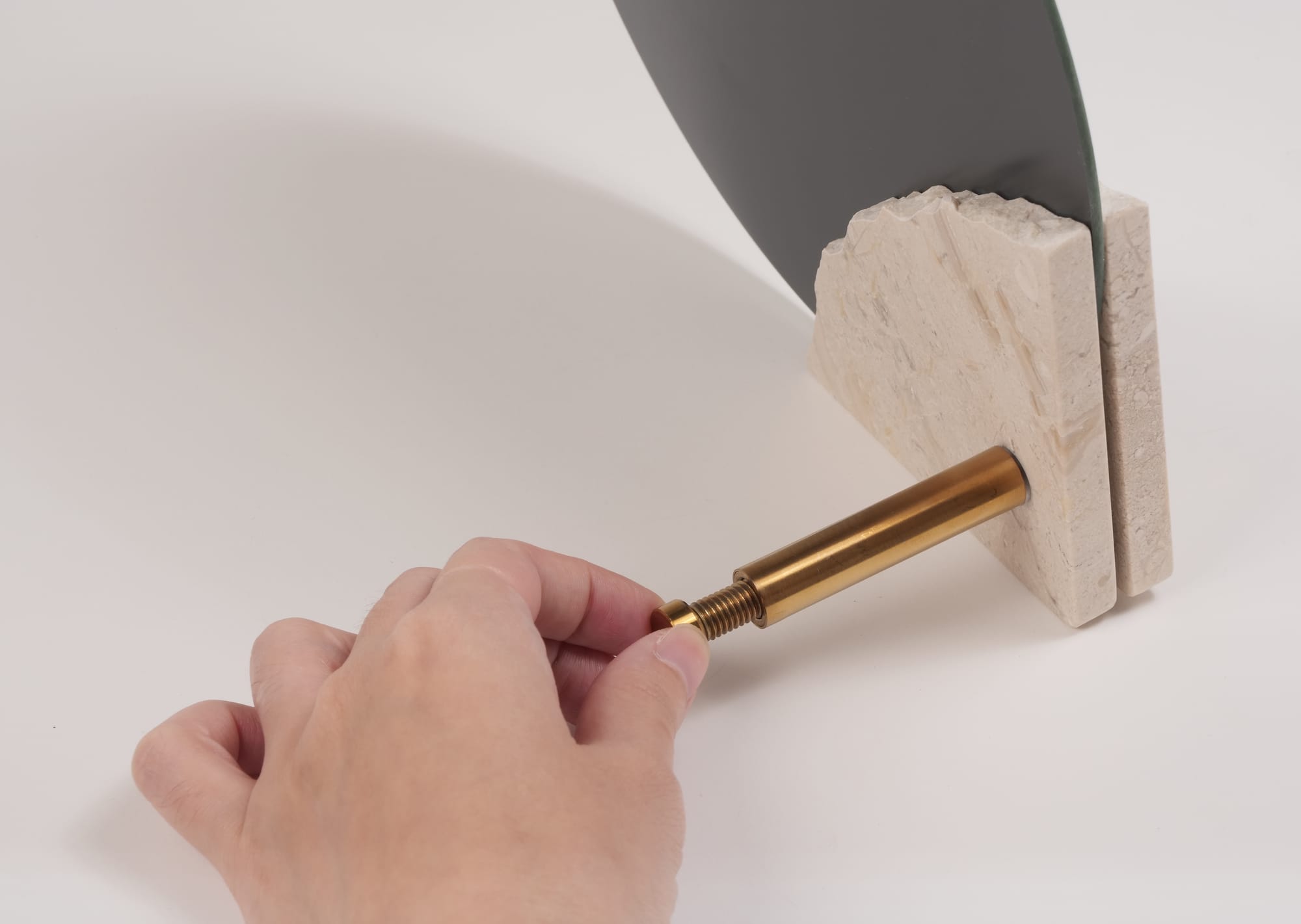
The design of Re-angle Mirror is intentionally restrained. It consists of just three elements: the mirror, a marble base, and a metal support. Fewer components mean less waste and lower production costs, but also a clearer expression of the design philosophy behind the object. Here, simplicity is not an aesthetic choice alone, but a structural one.
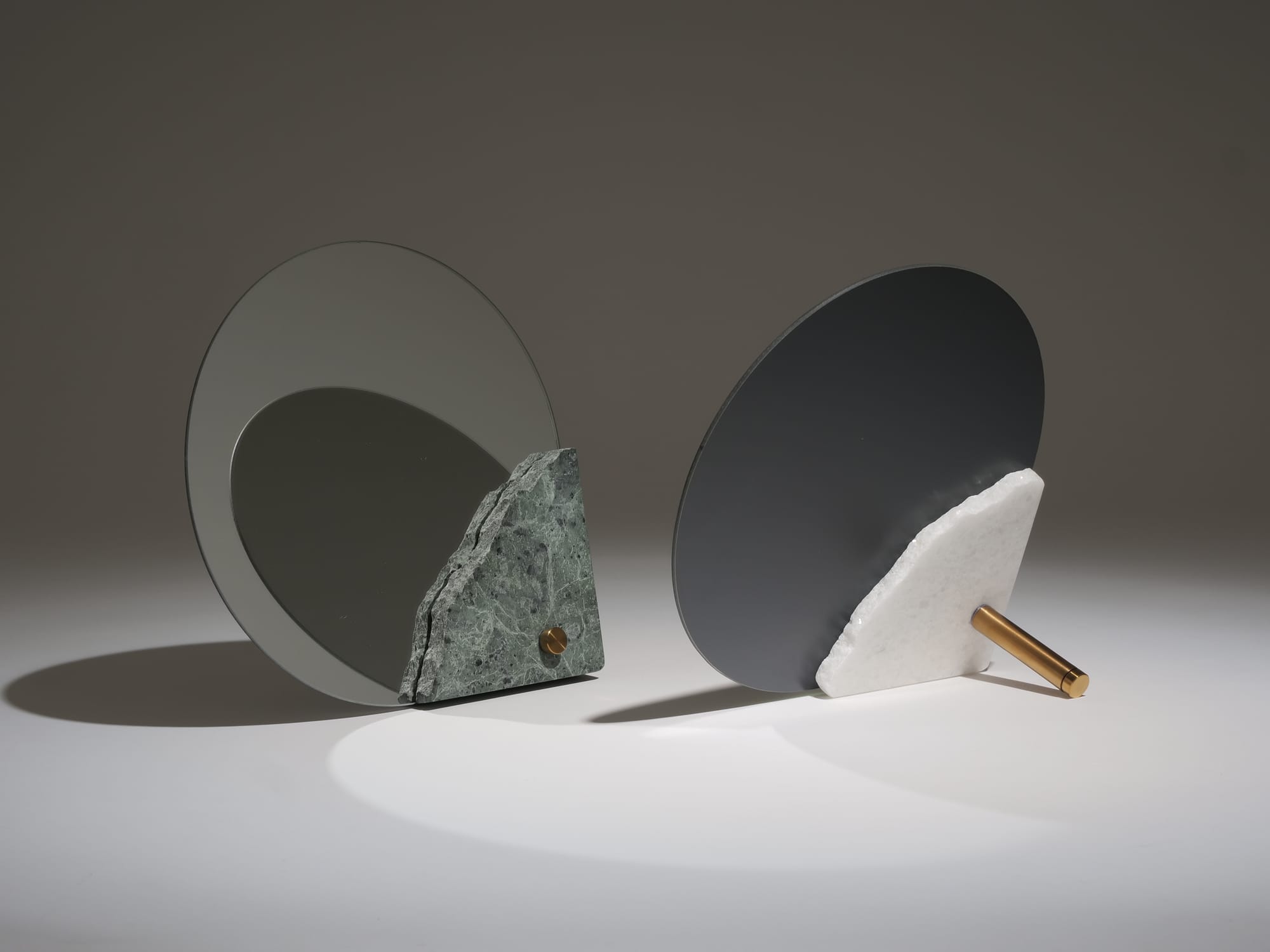
Placed on a desk, a shelf, or a bedside table, Re-angle Mirror settles into its surroundings seamlessly. It does not demand attention, but reveals itself through use, through touch, through time.
Beyond its physical form, Re-angle Mirror reflects a way of thinking about everyday living. The mirror can be placed leaning to the left or to the right, adapting to different spaces and personal habits. In this small but deliberate gesture, control is returned to the user. The object does not dictate how it should be used. It simply offers the freedom to live as you wish.
Re-angle Mirror is now available at Lightlogue!
If something here resonated with you, you’re welcome to become a Bridge Builder, a small gesture of support that helps keep this space glowing. Your kindness carries more stories, and more light, across to others.
No spam, no sharing to third party. Only you and me.

Member discussion